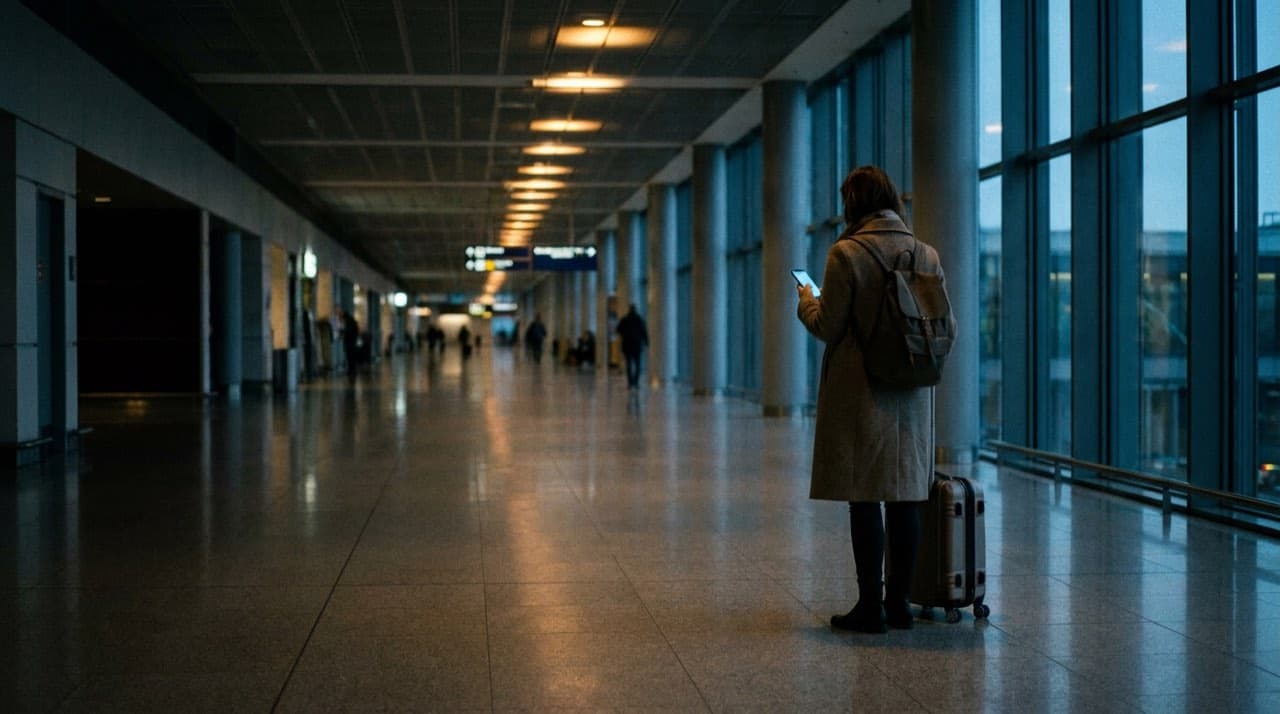
In 13 years with Emirates I landed in more than 90 countries, and I noticed something early on. The passengers who had trouble almost never had it in the air. They had it in the sixty minutes after the doors opened.
That hour is when you are at your least capable. You are tired, often dehydrated, working in an unfamiliar currency and language, and carrying everything you own. It is also, unhelpfully, when you have to make the most decisions in the shortest time.
So knowing what to do when you land in a new country is less about being clever and more about having already decided. Here is the order I use, and most of it happens before I board.
The Hour That Sets the Tone
Every arrival has the same shape: get off, clear immigration, collect a bag, get connected, get money, get out. Six things. The trouble is that most people improvise all six while jet-lagged, and improvising is exactly what the people working the arrivals hall are counting on.
Crew do not improvise. We land in a city we have never seen, have twenty hours there, and need to be back at the aircraft on time. The routine is the whole point.
Get Online Before You Land, Not After
The single biggest change in how I travel came from refusing to arrive offline. Without a connection you cannot check a fare, follow a route on a map, confirm a booking, or message anyone. Every other decision in this article gets harder.
A travel eSIM solves this properly. You install it at home over your own wifi, and it activates on the local network the moment you land. No SIM counter, no queue, no swapping a physical card in an arrivals hall with your bag between your feet, and no chance of losing your home number.
Two things to check before you rely on it. Your phone must support eSIM, which most handsets from the last few years do, and it must be carrier-unlocked. Test both while you are still at home and can do something about it.
Airport Wifi Is Not a Plan
Airport wifi is a fallback, not a strategy. It frequently needs a local phone number to receive a code, which is the exact thing you do not have yet. Some networks cap you at fifteen minutes. Others want a room number or a boarding pass you have already binned.
More importantly, treat any open network as public. Read the news on it. Do not do your banking, and do not enter card details. If you must, use your phone's own data instead.
Decide How You're Leaving Before You Land
I wrote a whole piece on airport taxi scams, and the honest summary is this: nearly every one of them depends on you making a decision while tired, in public, surrounded by people who do this every day and know you do not.
You remove the entire category by deciding in advance. If the transport is already arranged, there is nothing to negotiate, no fare to guess at, and no reason to talk to anyone who approaches you inside the terminal. You walk past all of it.
Whatever you choose, know before you land: roughly what the trip should cost, roughly how long it should take, and the name of the area you are going to. Those three facts turn a conversation you might lose into a conversation you cannot lose.
The Immigration Questions Everyone Fumbles
Officers ask the same few things: where are you staying, how long, and what for. What slows people down is not the questions but hunting for the answers in a phone that has no signal yet.
Before the wheels touch, have the address of your first night written somewhere you can reach offline, along with your return or onward flight details. A screenshot works. So does a note in your phone, as long as it does not need a connection to open.
If a landing card is handed out during the flight, fill it in on the aircraft while you have a tray table and a working pen. The queue for the two shared pens at immigration is a genuinely avoidable ten minutes.
Money: One Rule Worth More Than the Rest
Skip the currency exchange counters in arrivals. Their rates are the worst you will see on the trip, and they are priced precisely for the traveller who has not planned. Use a bank ATM instead, ideally one inside the terminal building rather than a standalone machine in a corridor.
Then the rule that saves the most money for the least effort. When the ATM or a card machine offers to charge you in your home currency instead of the local one, always decline and choose the local currency. Accepting lets the machine set its own exchange rate, and it is never in your favour. It is presented as a helpful convenience. It is a fee.
Take out enough for the first day or two and no more. Carrying a fortnight of cash from the airport is its own risk.
The Message You Send Before You Move
Before I leave the terminal I send one message to someone at home: I have landed, this is where I am going, and this is roughly when I expect to be there. If I am in a car I did not pre-arrange, I share my live location for the length of the journey.
This costs about twenty seconds and changes what happens if something goes wrong. Somebody knowing roughly where you should be, and roughly when, is the cheapest safety measure in travel.
The First Hour, In Order
- Before you fly: install the eSIM, arrange the transfer, screenshot your first night's address.
- On the aircraft: fill in the landing card while you have a table.
- On landing: turn data on and confirm you have a signal before you leave the gate area.
- At immigration: address and onward flight ready without needing a connection.
- After baggage: bank ATM, decline home-currency conversion, take a day or two of cash.
- Before you move: message someone with where you are going and when you expect to arrive.
- Leaving: walk past anyone who approaches you inside the terminal.
None of this is about being suspicious of a place. It is the opposite. Getting the first hour right is what lets you stop managing logistics and actually arrive somewhere.