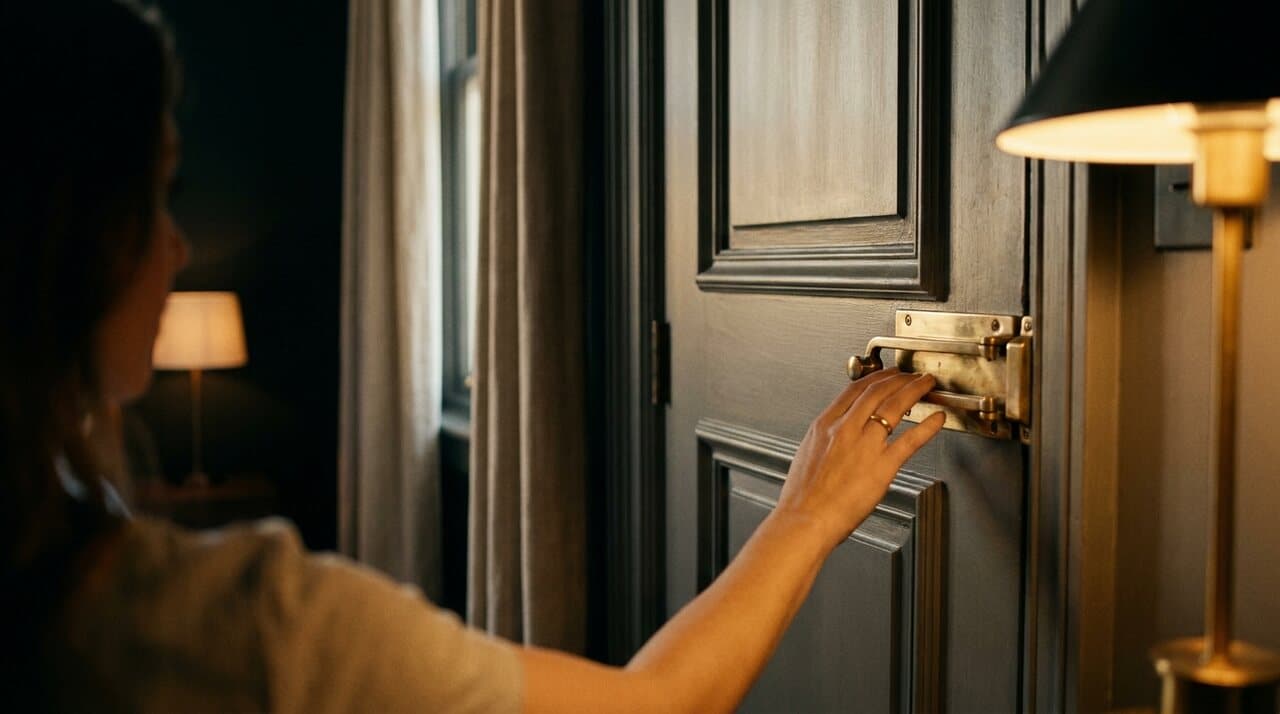
Thirteen years of hotel rooms across 90-plus countries. Some were beautiful. Some were budget. Most were perfectly fine. But somewhere around year two, I developed a set of checks I run in every room, every time, regardless of the star rating. They take less than three minutes total. And a few of them have caught things I was genuinely glad to catch.
These aren't about being on edge or treating every hotel like a threat. They are the same things I watch experienced solo female travelers and cabin crew do quietly, without drama, before they unpack a single thing. Once you learn them, they become automatic.
Here are the 11 hotel room safety checks that are now wired into every check-in I do.
What to Do at the Front Desk Before You Even See the Room
1. Stop the desk agent from saying your room number aloud
This one starts before you reach the room. When the front desk agent slides the key card toward you and starts to announce your room number, ask them to write it down instead. "Could you just write that for me?" is all it takes. Your room number tells anyone in earshot exactly where you are sleeping, alone. A stranger in the lobby doesn't need that information.
Most well-trained staff will do this without hesitation. If they seem confused, point to the card and say you prefer not to have it said out loud. You are not being difficult. This is a standard request at many hotels, particularly in the US and UK.
2. Request the right floor
If you're booking directly or can request at check-in, aim for floors 3 through 6. Ground floor and floor 1 are the easiest to access from outside, through windows, balcony doors, or fire escapes. Above floor 6, most fire department ladders cannot reach, which matters more than most people realize until it is relevant. Floors 3 to 6 give you the best balance between security from outside access and realistic evacuation options in a fire.
Hotel Room Safety Tips for Solo Female Travelers: The First Five Minutes
3. Find the fire exits before anything else
On the walk from the elevator to your room, count the doors to the nearest fire exit stairwell. Count them properly: not "it's down that way," but "it's 9 doors to the left." In a smoke-filled corridor, you navigate by touch and count, not sight. There is usually a fire exit map on the back of your room door too. Look at it. This takes 20 seconds and is one of the most genuinely useful things on this list.
4. Test the deadbolt, chain, and door alignment
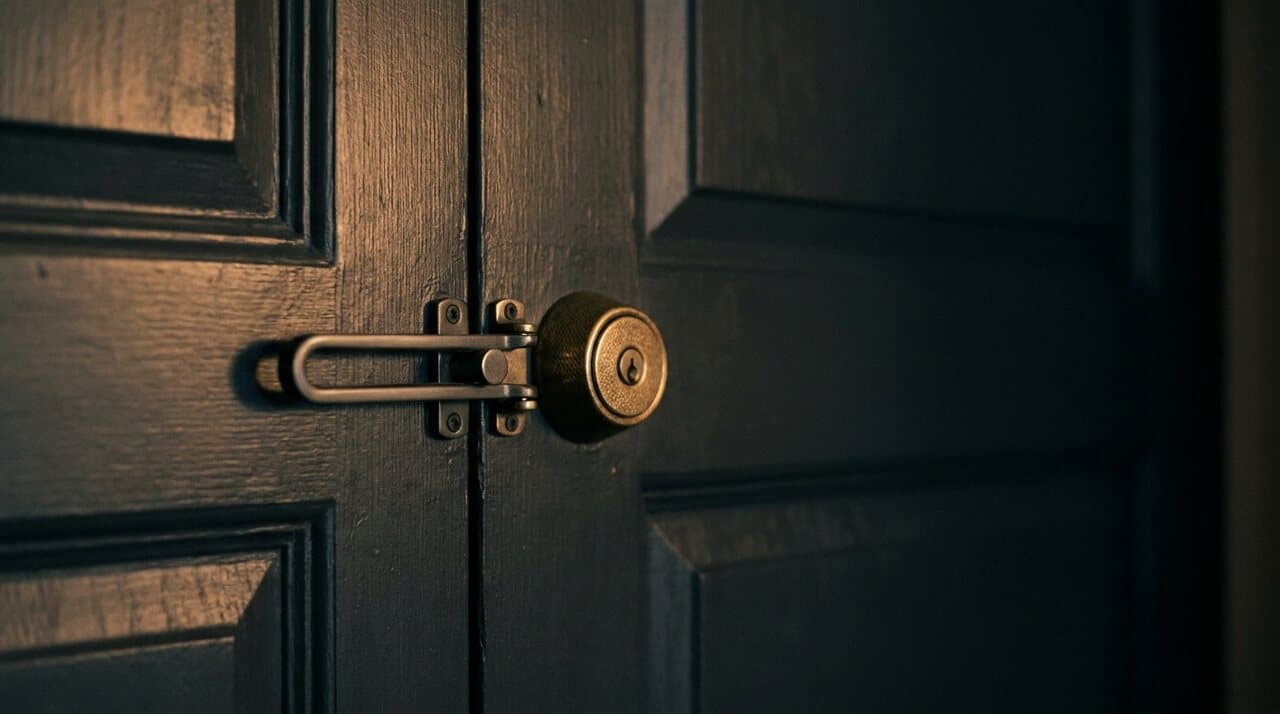
Close your door and test the deadbolt. Test the chain or swing-bar lock. Then push the door gently from the inside. In older hotels especially, doors don't always close flush, and a firm push can reveal a gap the regular latch doesn't fully bridge. If the chain feels flimsy or the deadbolt doesn't engage cleanly, call the front desk and ask to move. You don't need to explain in detail. "The lock isn't sitting right" is enough. Hotels deal with this regularly.
5. Use a doorstop alarm
This is the one item I pack on every trip without exception: a small rubber doorstop with a built-in alarm. They cost under $20 and weigh almost nothing. Wedge it under the inside of the door before you sleep. Even if someone has a key card that works, the doorstop physically resists the door opening. The alarm version sounds if pressure is applied. It is not foolproof, but it changes the situation meaningfully.
6. Find and lock the connecting door
Many hotels have rooms with a door connecting to the room next door. These are designed so both sides must unlock independently, but in practice, your lock is all you control. Find the connecting door, which often blends into the wall or looks like a second wardrobe, lock your side fully, and push it to confirm it does not move. If it moves at all, call the front desk. This is one of the most overlooked vulnerabilities in hotel rooms.
The Checks That Take Under 60 Seconds Each
7. Close every curtain and check for gaps
Stand in the room with the lights on and look for gaps at the sides or bottom of the curtains. Then consider what angle someone outside could see you from. On lower floors especially, close the curtains fully and use the blackout layer, not just the sheer. A thin gap at the edge of a curtain is enough for someone outside to confirm the room is occupied and that one person is alone in it.
8. Check behind the bathroom door and in the wardrobe
I do this every time. Not because something is likely, but because "not likely" is not "never." It takes four seconds. Open the wardrobe. Look behind the bathroom door. Check the shower if the curtain is drawn. Then you know, and you can genuinely relax for the rest of the stay.
9. Keep the second key card separate from the first
If the hotel gives you two key cards, carry one and leave the other somewhere in the room. If you're ever in a situation where someone asks to see your key card (in a corridor or elevator), you hand over the spare and keep your main card in your bag. Small, but it matters.
10. Leave the Do Not Disturb sign on when you go out
The Do Not Disturb sign is not just for mornings. When you leave the room during the day, leaving it on signals that the room may be occupied. It removes the easy visual confirmation that the room is empty and unattended. If you need housekeeping, arrange a specific time with the front desk rather than leaving the sign off all day.
11. Put your phone, key card, and shoes within reach of the bed
If something happens in the night and you need to leave fast, you do not want to search for your phone in the dark. Keep it charged near the bed, with your key card and shoes within arm's reach. Some travelers also keep a small torch or use the phone flashlight on their lock screen. The idea is simple: if you have to move fast, you can.
One More Thing That Doesn't Fit on a List
These checks handle the practical side. But there is something less tangible worth naming. If something feels wrong at check-in, whether it is the vibe of the room, the location in an isolated corridor, the behavior of someone at the desk, or a lock that feels off, trust that. Ask to move rooms. Hotels expect this.
I have moved rooms three times in 13 years: twice because of a lock, once because the corridor felt too isolated. No detailed explanation was needed. "I'd prefer a different room" was enough each time.
The Full Checklist
- Ask for the room number in writing at check-in, not said aloud.
- Request floors 3 to 6.
- Count fire exit doors on the walk to your room.
- Test the deadbolt, chain, and door alignment.
- Pack and use a doorstop alarm.
- Find and lock the connecting door.
- Close curtains fully and check for gaps.
- Check behind doors and in the wardrobe when you first arrive.
- Keep a spare key card separate from your main one.
- Leave the Do Not Disturb sign on when you go out.
- Keep phone, key card, and shoes within reach of the bed.
None of this is dramatic. And once you have done it a few times, it takes less than three minutes and becomes second nature. The goal is to run the checks, confirm everything is fine (which it almost always is), and then switch off completely for the rest of your stay.